
Ericsson Product Information Assistant
Company:
Ericsson
Date:
2020 – 2021
Role:
Designer & researcher
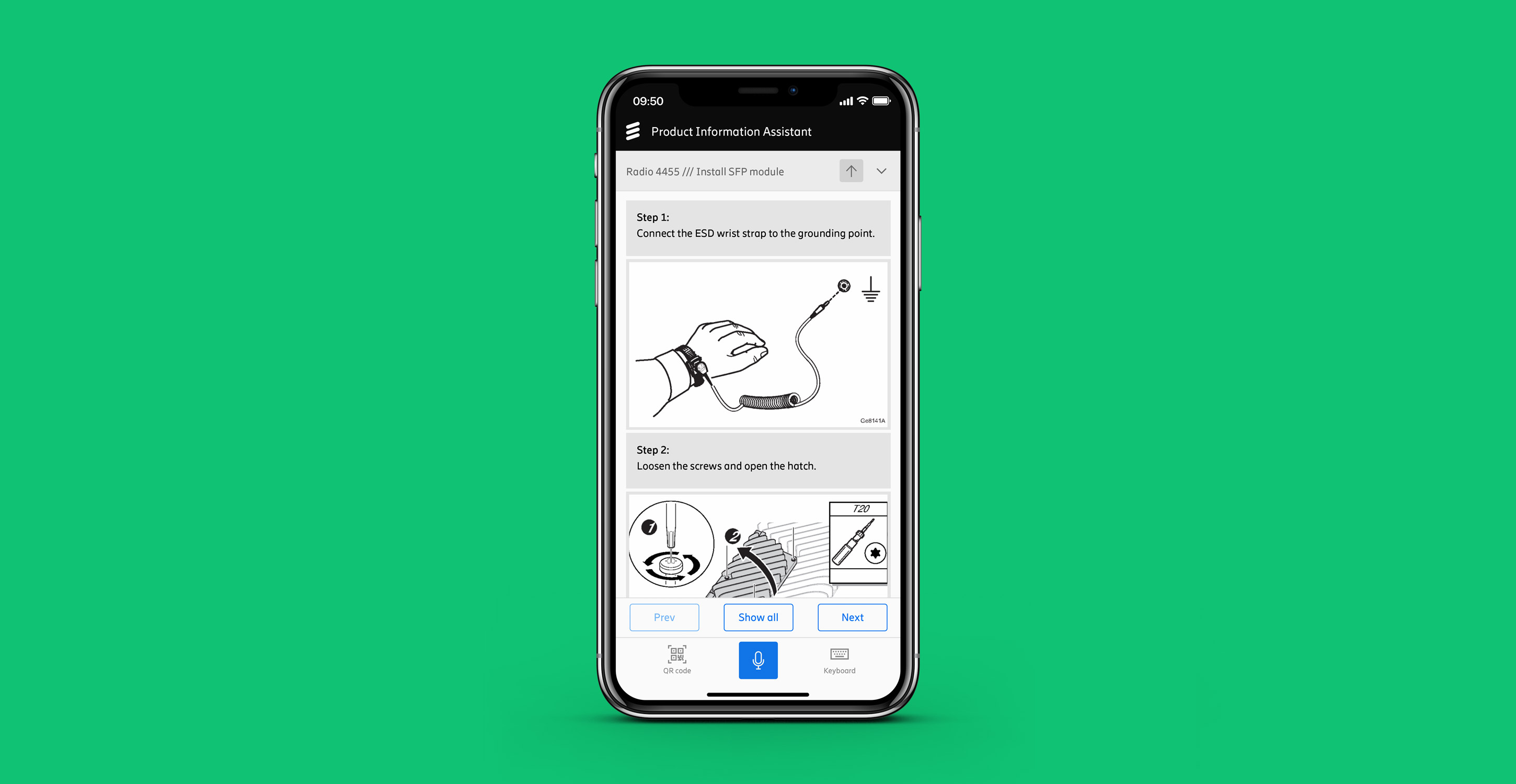
In 2020, I got the opportunity to work on an AI-powered assistant for Android and iOS, called Product Information Assistant, or PIA for short. I was brought in to lead the UX work. Since this was during the pandemic, the project was fully remote, with teams distributed across different locations. The goal was to give users a way to ask product questions in natural language and receive quick and accurate answers.
Initial UX assessment
The Product Information Assistant had been in development for some time with the goal of creating a virtual mobile assistant that could reason, hold small talk, and answer any questions relating to Ericsson Radio System products. The primary use case would be field installers and similar roles that needed support in handling and setting up Ericsson equipment.
When starting the project, my first assignment was to do a UX assessment and get a clear picture of where things stood. This meant understanding the existing functions, features, and use cases. I also analyzed the current UIs against the brand guidelines and Ericsson Design System requirements.
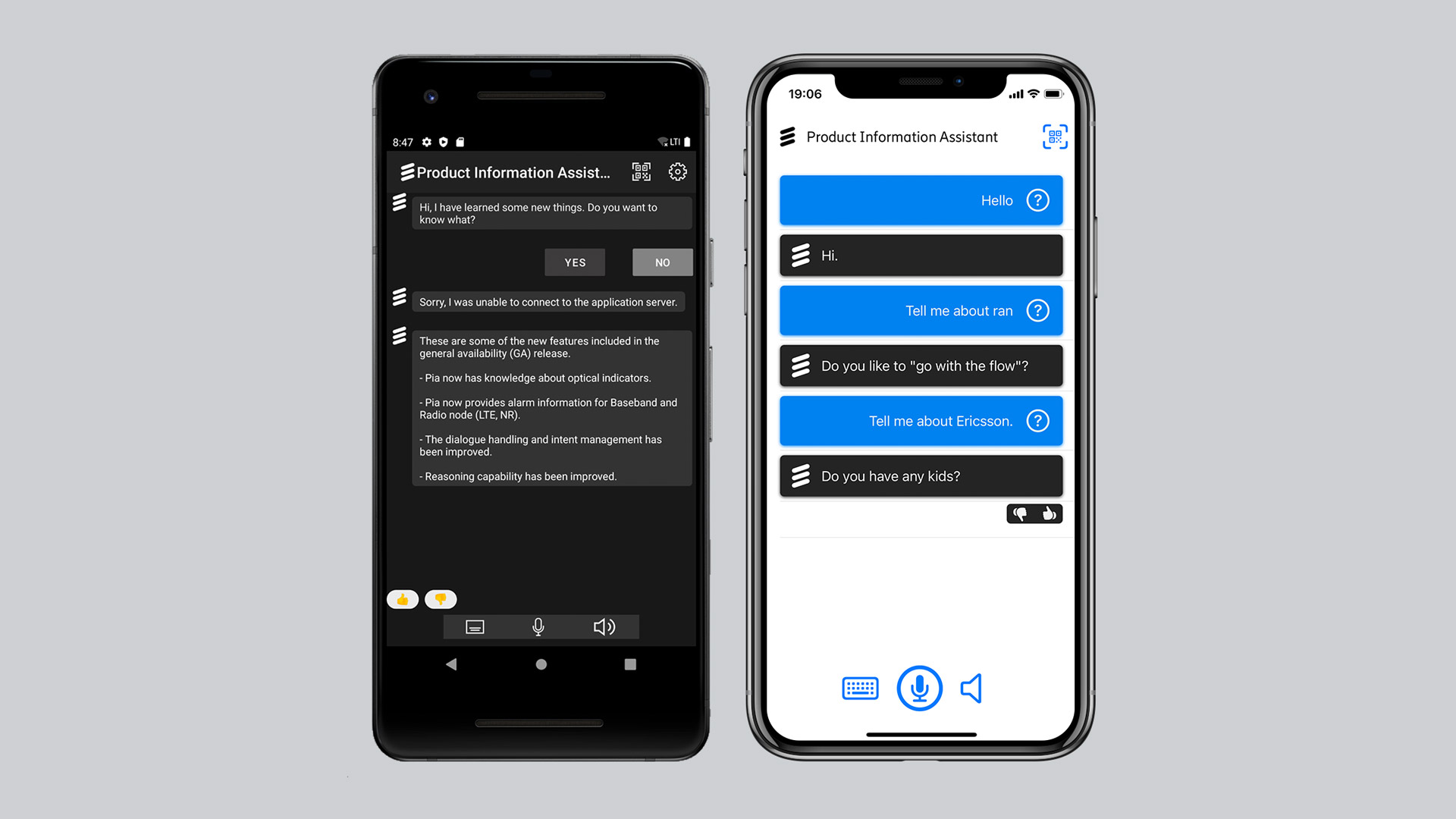
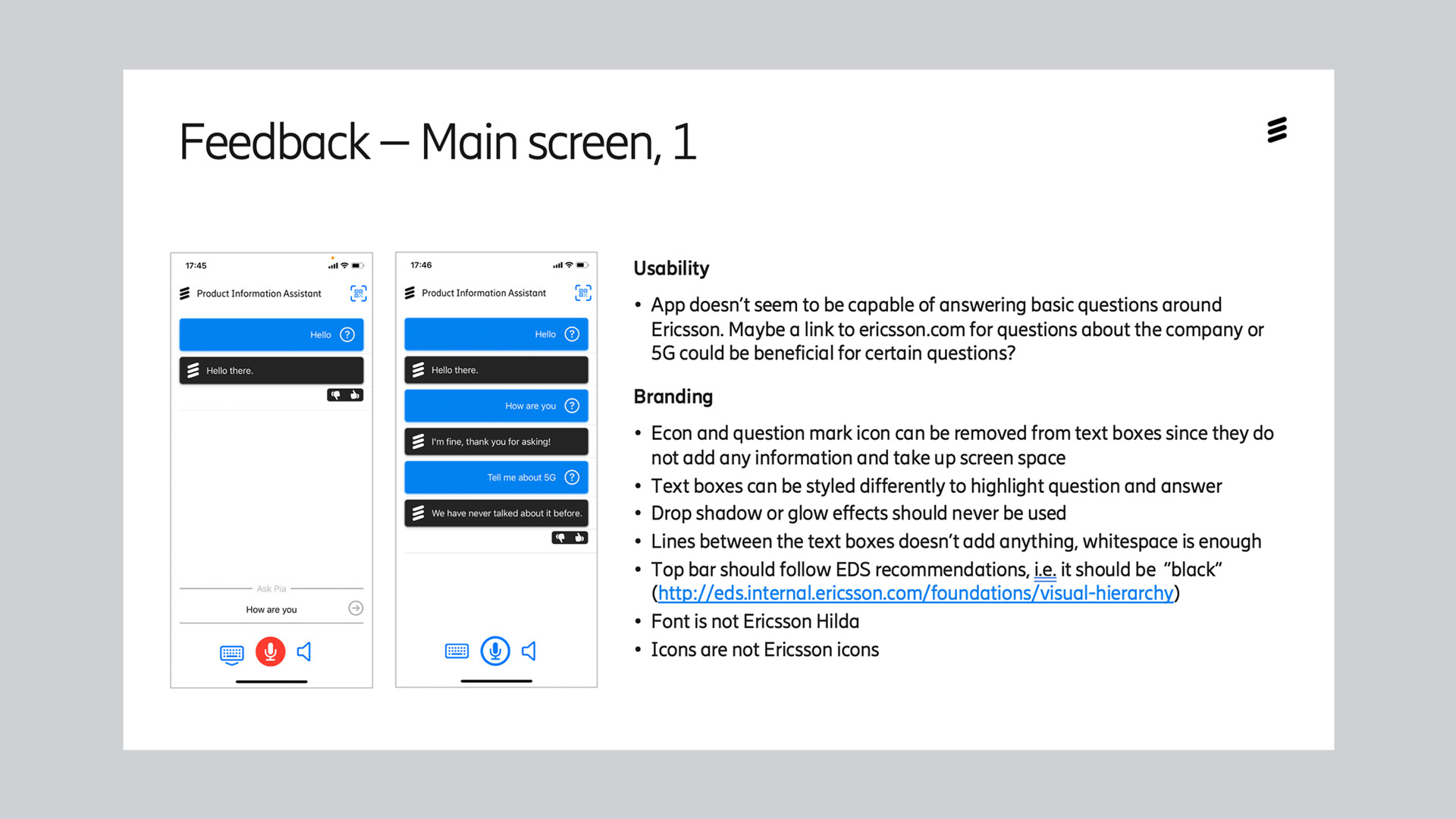
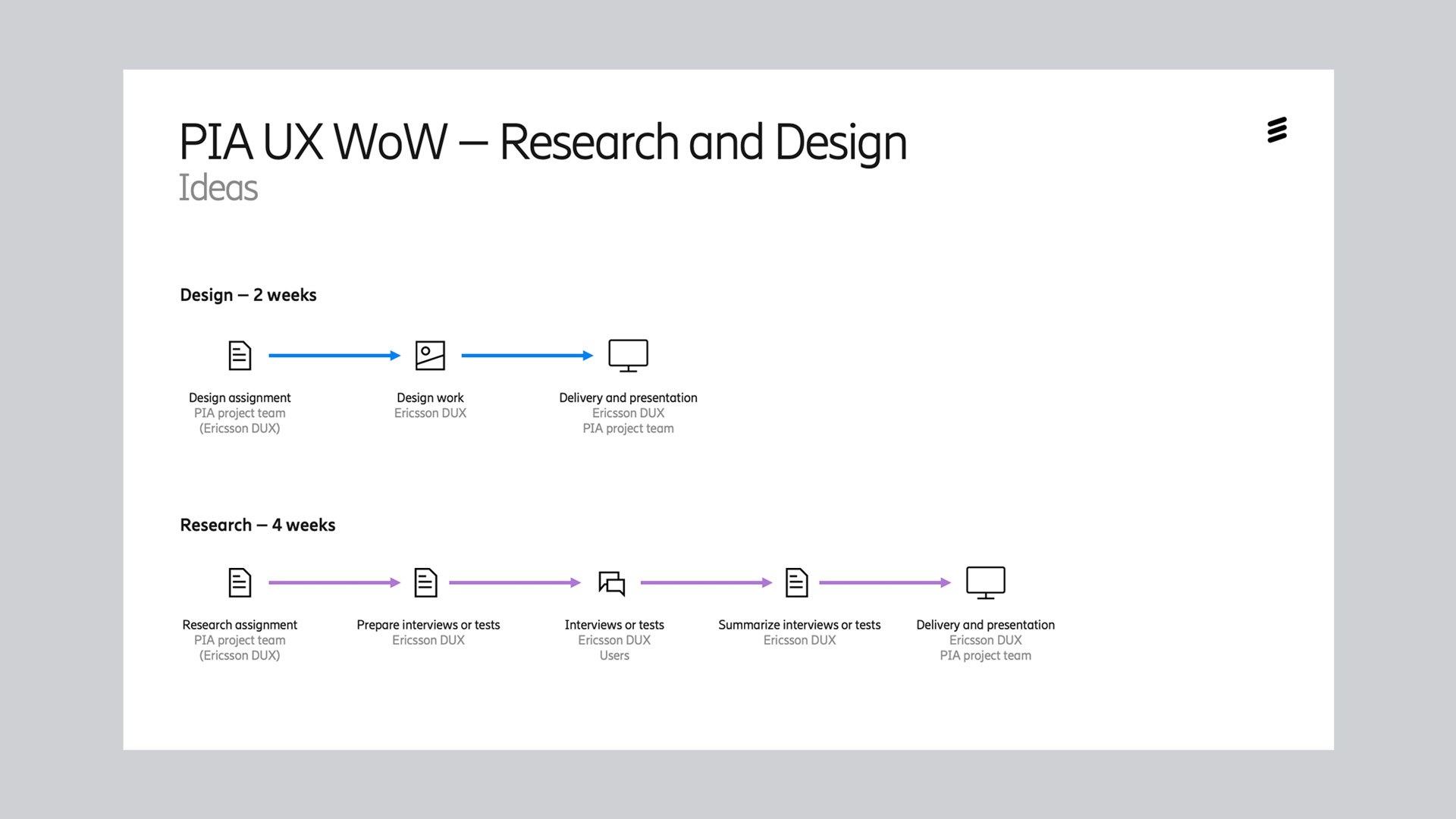
At the time I joined, the app had not put much emphasis on UI or UX. Among my initial findings, I noticed that colors, icons, fonts, and other brand assets were misaligned. Ericsson’s app guidelines for Android and iOS were limited at the time. Still, the existing design recommendations left plenty of room for improvement. So my first order of business was to raise this with the product owner and developers. At the same time, I proposed a way for us to work with both design and research in parallel.
Early prototypes and explorations
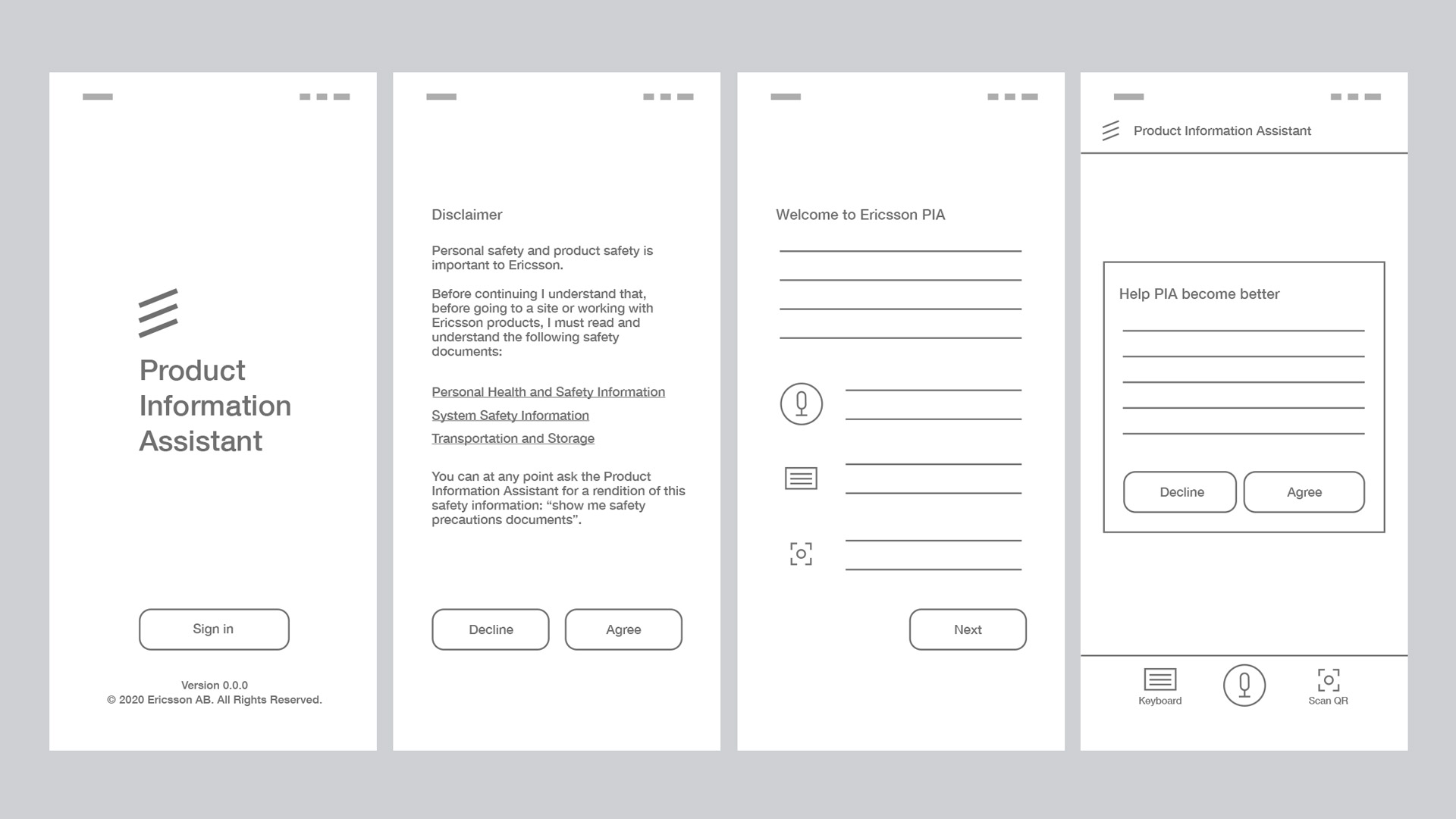
Following the UX assessment, I began creating early prototypes of the app’s basic functions while aligning the design with our guidelines. One example was a wireframe prototype that presented a list of different installation procedures to the user. PIA aimed to give field personnel product information in the palm of their hand, so this was a prioritized feature.
I also explored how micro-interactions, micro-animations, and sound design could enhance the experience. For example, I prototyped how the main speech button would function. The user would tap to activate it, the app would listen, and then transition to a reply state. The color and icon would change as the app responds.
Continuous design
As the project progressed, I continued refining PIA’s design across multiple areas. These ranged from content presentation and visual hierarchy to the app’s navigational structure. This was well before the wave of generative AI tools that arrived in 2023, so there were few established conventions to draw from beyond standard chat UIs. And even those didn’t quite fit, because PIA’s backend worked differently from what we now associate with AI assistants.
Rather than relying on a large language model (LLM), PIA sourced its answers from a structured content layer at the bottom. A metadata layer (taxonomies) and a semantic middle layer sat in between. This architecture meant the app could give precise, verified answers. But it also meant the interaction model needed to reflect that structure.
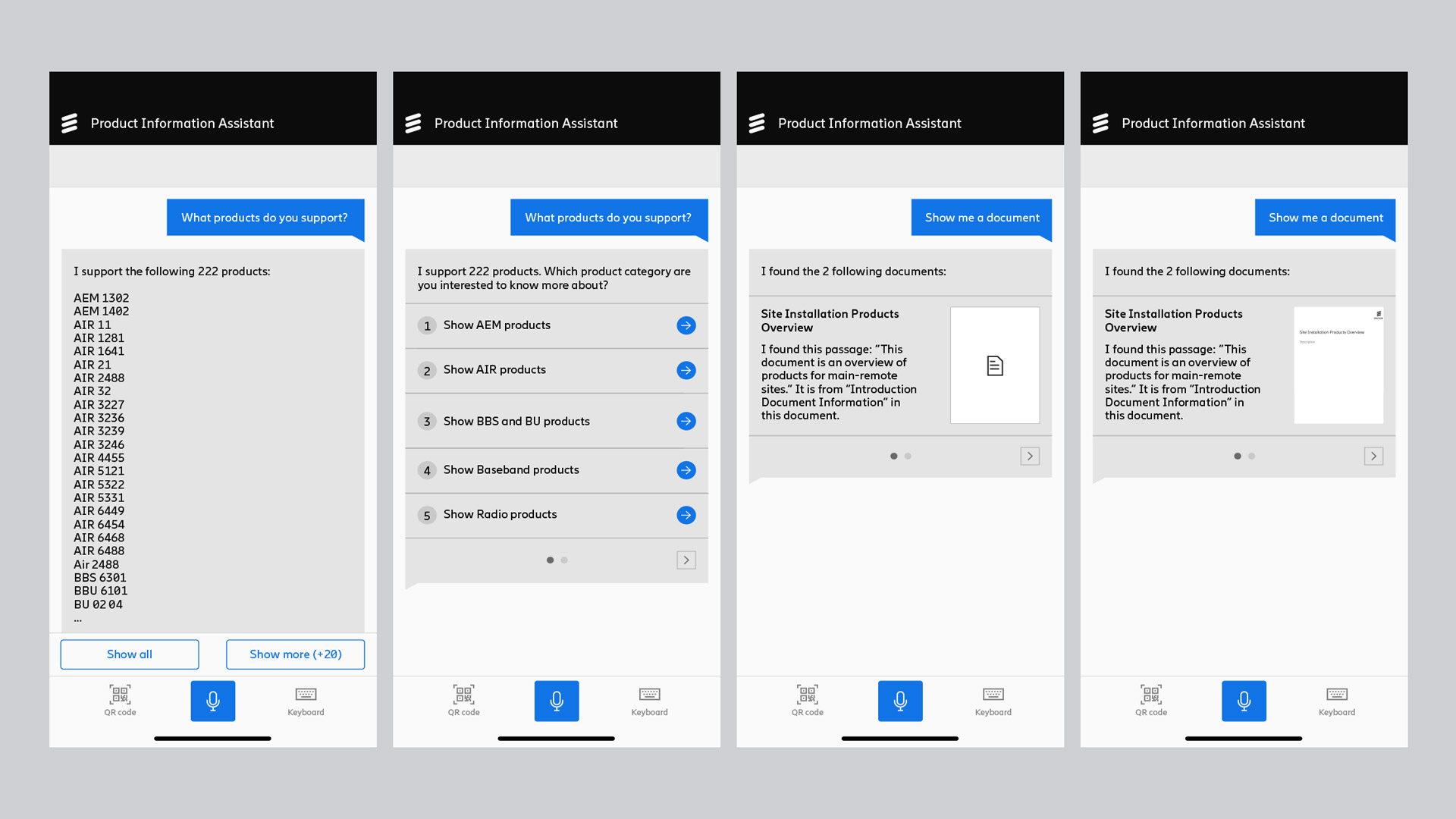
One area I worked on was how content and rich media, such as PDF documents, rendered in the app. This included a preview state showing a document’s first page and a thumbnail state with a generic placeholder icon when no preview was available.
Another area was the visual organization of information. I introduced topic-based dividers and proposed grouping related topics together rather than stacking everything top to bottom. What seemed like a simple change turned into lengthy discussions with developers. The underlying data structure made it more complex than expected.
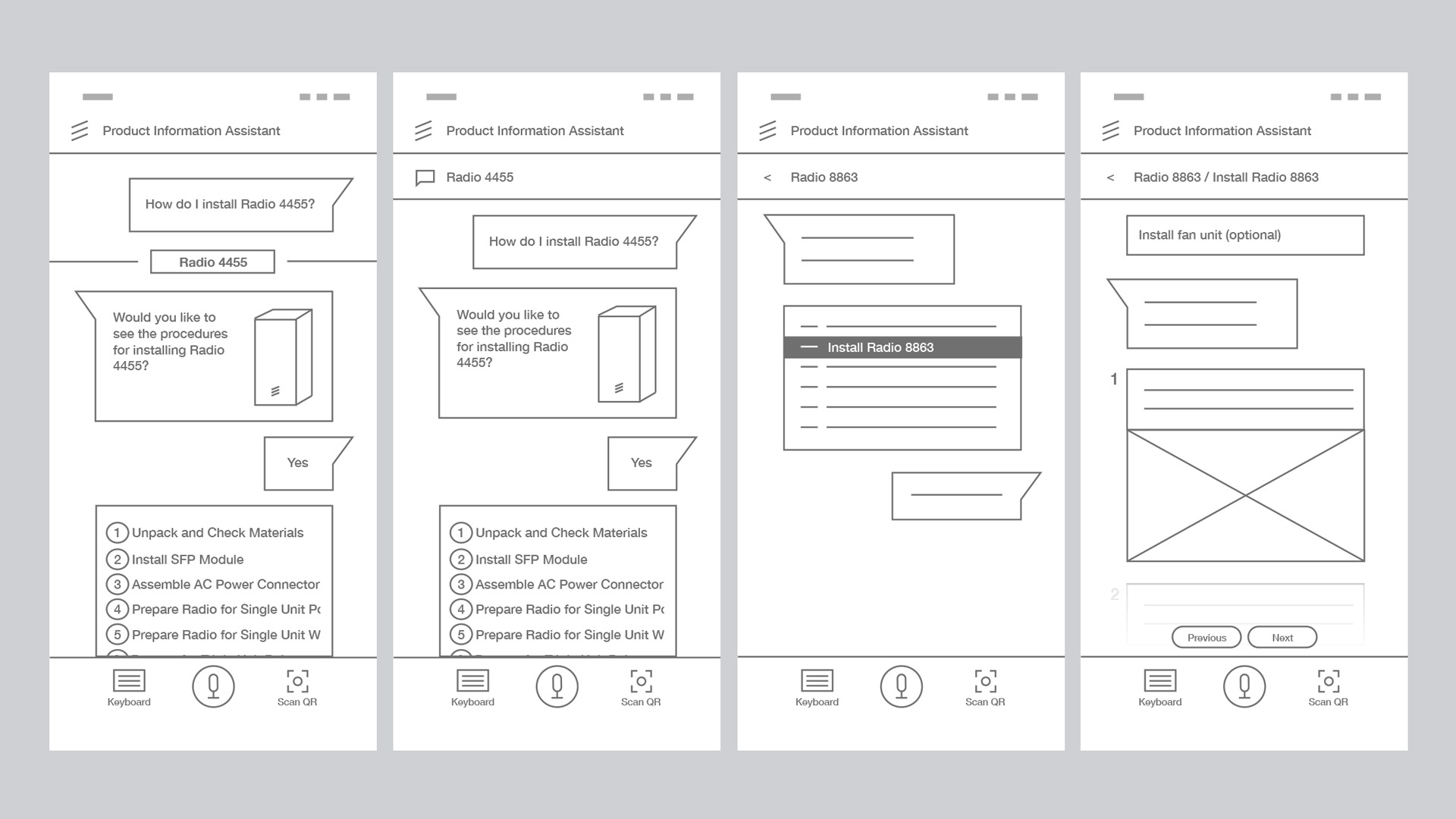
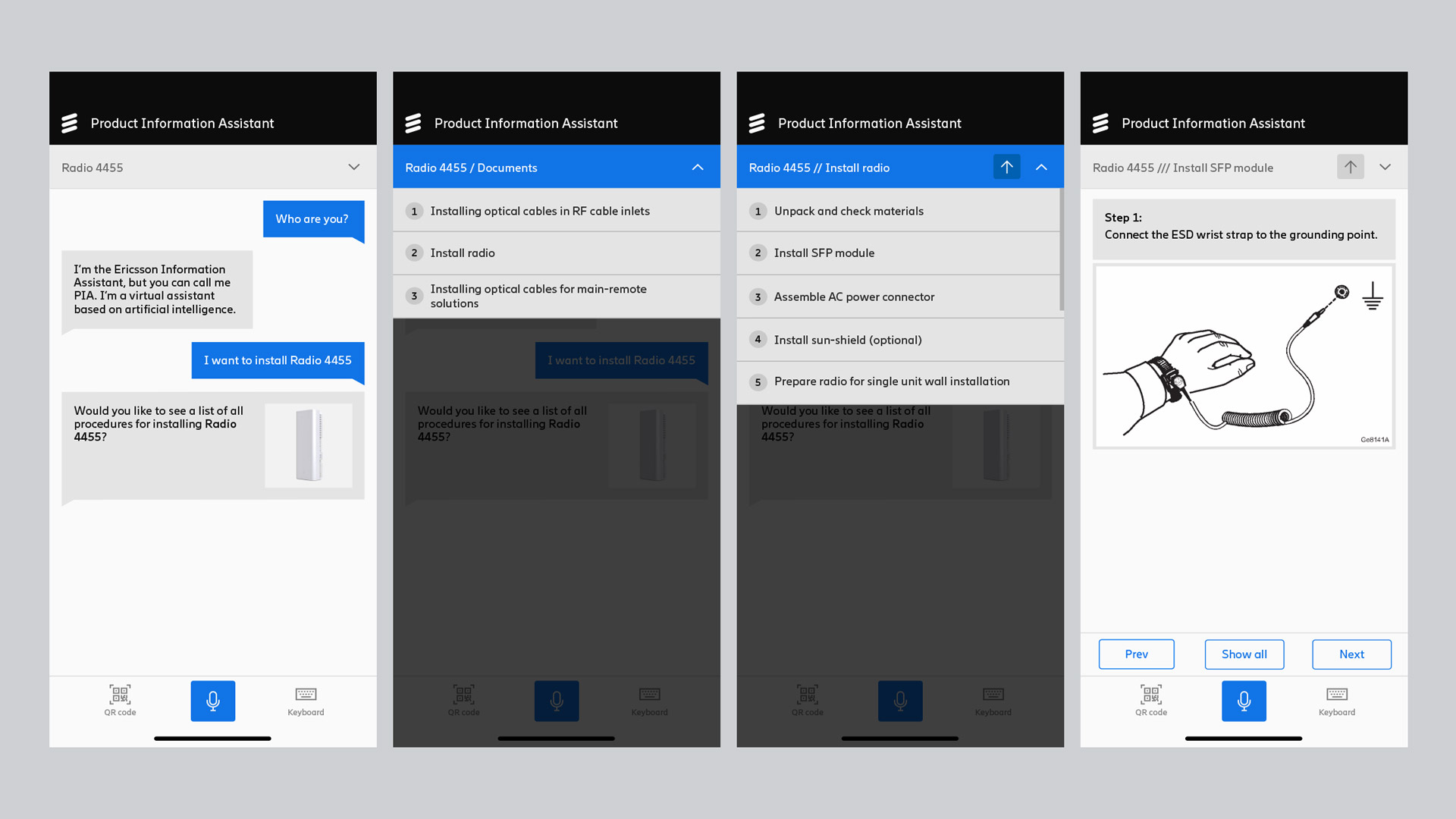
Together with the developers and domain experts, I explored how users could navigate within and across queries. The idea went beyond asking a question and getting an answer. Users should be able to move back and forth through a conversation thread. For example, if a user had asked about a specific radio product and was viewing related installation procedures, they could step back to the product level. They could also branch into a different procedure without starting over and without returning to the chat input. In essence, we were designing a browsable conversation: structured navigation layered on top of a conversational interface.
Rollout and user interviews
The Product Information Assistant reached general availability in the summer of 2021. Around the same time, I took on responsibility for a user study as part of a wider rollout targeting Saudi Arabia and Kenya. As a first step, I aligned with Ericsson representatives from both regions who handled site installations and maintenance. From there, I sent introductory emails to potential participants, briefly explaining the study’s purpose, and then booked interviews.
The goals were to verify whether users felt PIA met their expectations and compare it to other product information sources. I also wanted to assess participants’ attitudes toward voice-based apps and services.
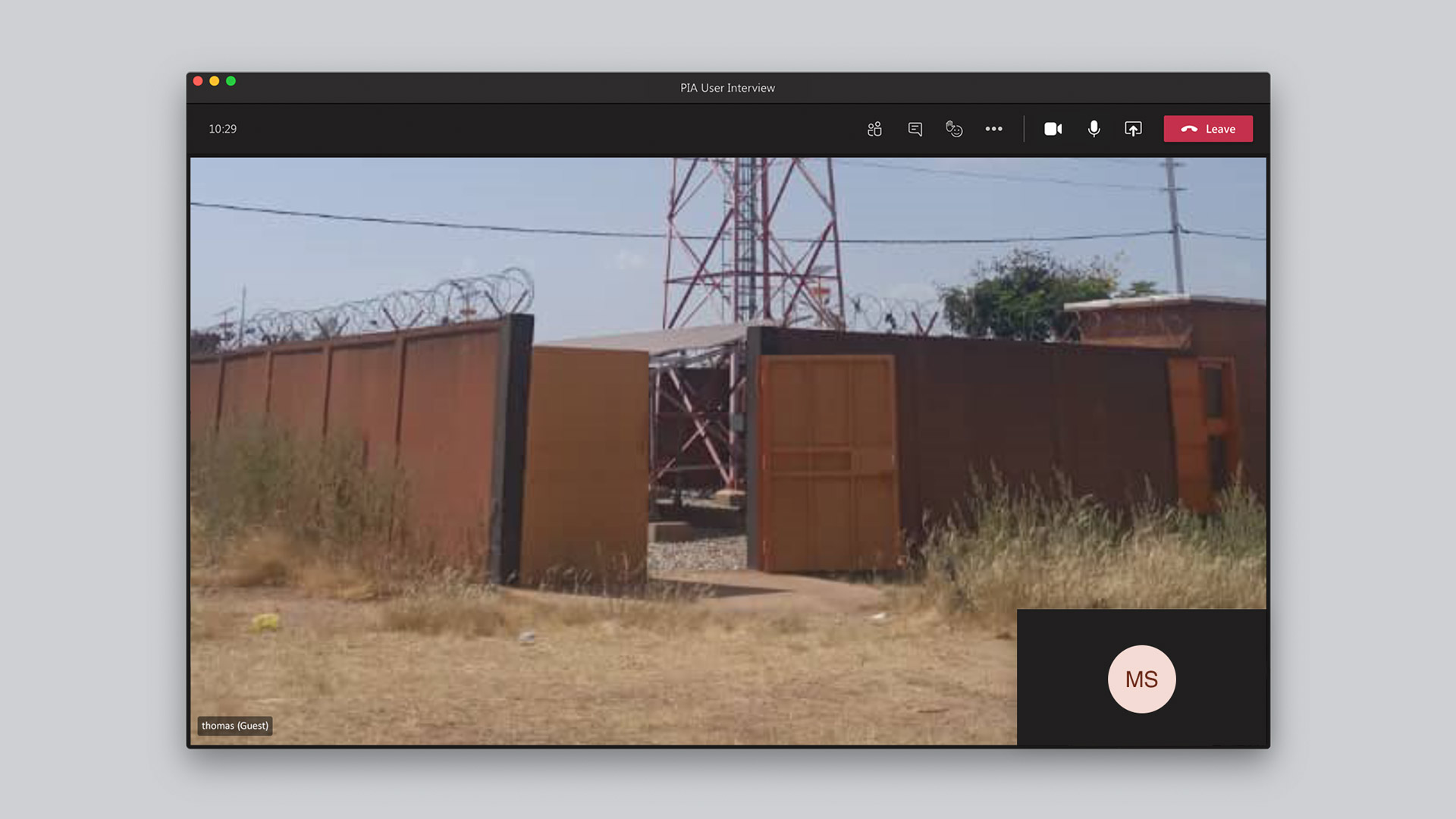
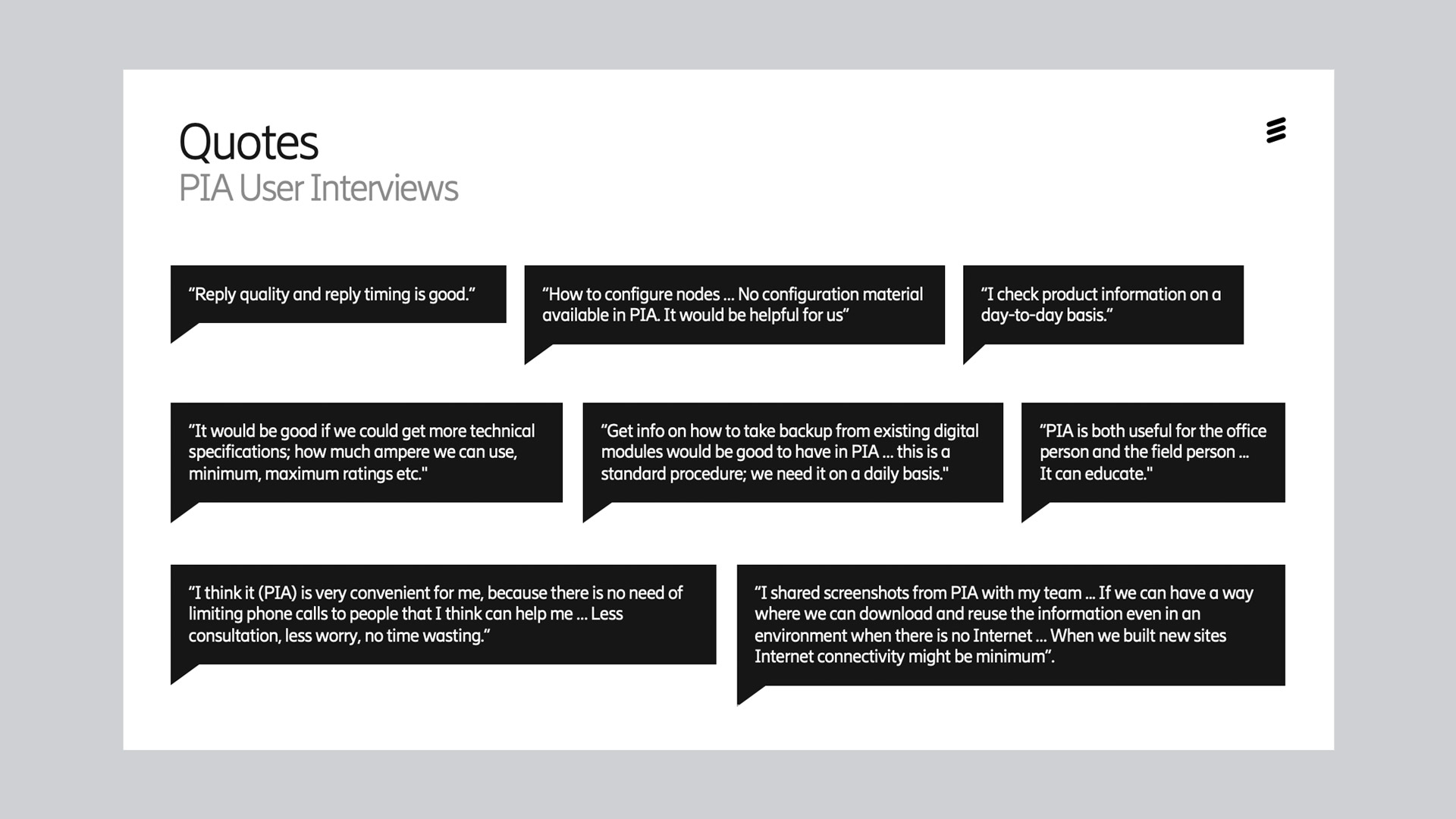
In total, I conducted 10 semi-structured, one-on-one interviews with field personnel over Microsoft Teams. An early hypothesis was that users needed additional language support in the app, and the interviews confirmed this. Beyond that, we gathered plenty of valuable feedback to improve the app. Even so, the overall impression was positive. Users found PIA easy to use and appreciated having product information on their smartphone rather than on paper or a laptop.
One recurring theme was the need to download and share information from PIA, for example as PDF files, since many sites have limited or no connectivity. This finding resonated with stakeholders and fed directly into ongoing discussions about offline capabilities.
Stakeholders were pleased with the results, and we discussed expanding the research further. However, due to budget limitations, my involvement in the project ended shortly after.
The offline and sharing content is something we have already started to discuss. I think this is great.
― Product Owner, Product Information Assistant
Looking back, the Product Information Assistant was a fun and genuinely interesting project to be part of. It was one of the first AI-supported apps at Ericsson and one of very few designed purely for smartphones. Working on conversational UI before the current wave of AI tools meant there was no established playbook to follow, which made the design work both challenging and rewarding. From the initial UX assessment through to the user interviews, it gave me the chance to shape a product end to end and see real users respond to it in the field.